Define, track, and adjust financial and programme-related goals that directly support your organisation’s mission.
Whether planning emergency response reserves, programme expansion, or operational sustainability, this module integrates with the Accounting system to ensure alignment between goals, budgets, and expenditures.
Create measurable objectives, monitor results, and make informed financial decisions based on real-time progress and resource availability.

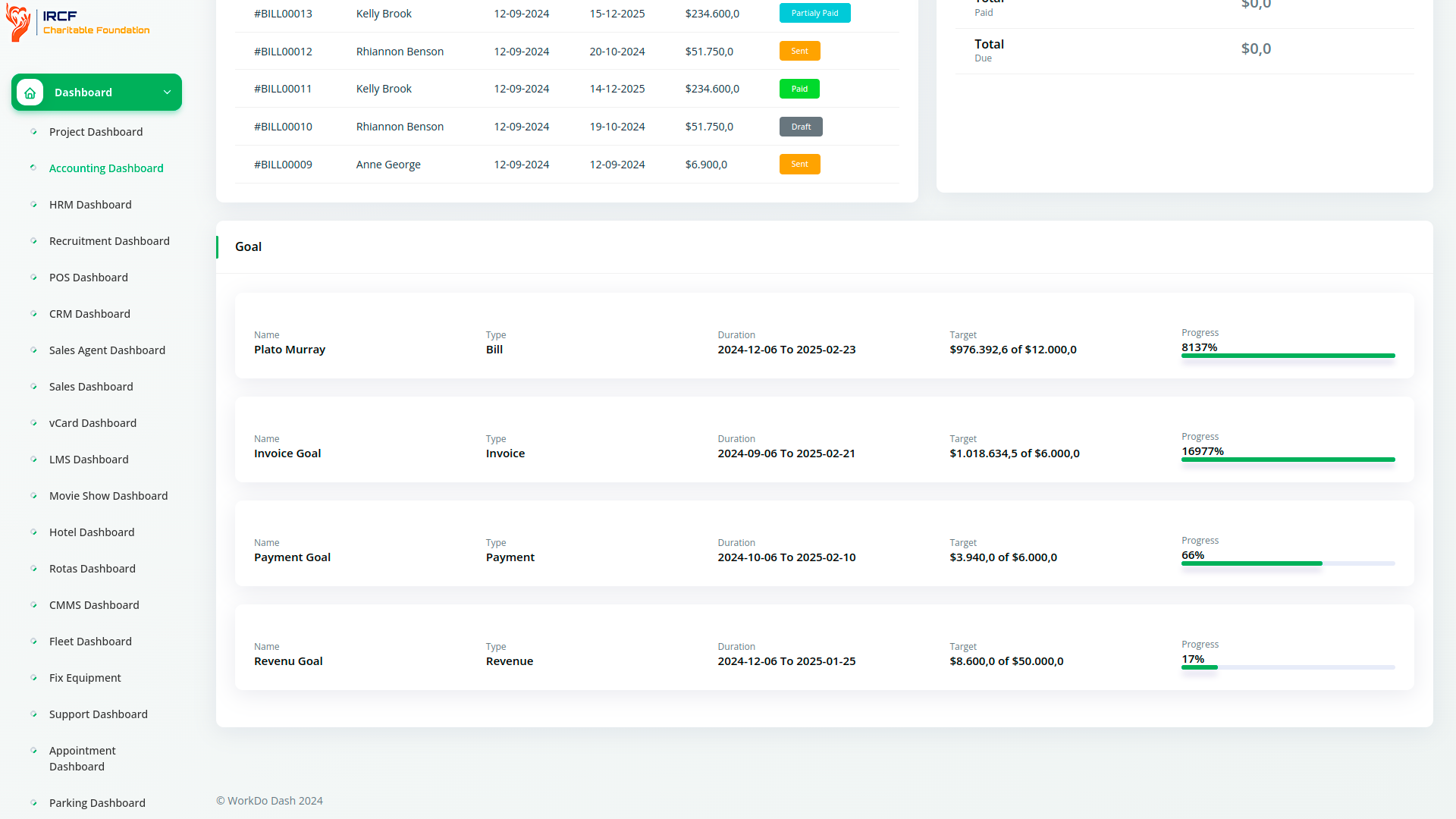
Financial goals guide how your organisation allocates, prioritises, and safeguards funding across programmes and timeframes.
Each goal supports the development of transparent budgets, long-term forecasts, and donor-aligned resource strategies.
Use the module to align budget lines with strategic objectives — whether for grant-specific implementation, reserve building, or internal capacity development.
Financial goals are intentional, time-bound objectives that determine how your organisation allocates, uses, and protects financial resources in support of its mission.
These goals enable both short-term responsiveness (e.g. pilot projects) and long-term sustainability (e.g. operational reserves, multi-year funding).
Clear goals increase organisational resilience, support better decision-making, and reinforce alignment with donor expectations and community needs.
Financial goals provide structure and foresight, helping your organisation translate mission statements into measurable financial strategies. They support accountability to boards, donors, and communities by making budgeting decisions more transparent and impact-driven. Over time, they enable the institution to adapt to shifting priorities, manage risk, and plan for scale, innovation, or emergency response.
Depending on your mission and operational context, financial goals may include: Establishing an emergency reserve to support crisis response. Expanding fundraising capacity or diversifying funding sources. Increasing annual programme investment by a defined percentage. Reducing administrative overhead while maintaining service quality. Aligning restricted fund usage with donor and audit compliance requirements. These goals evolve as organisational needs, funding landscapes, and external challenges change.
Without clearly defined goals, it's easy for spending to become reactive or disconnected from strategic priorities. Financial goals enable better planning, strengthen internal controls, and increase donor trust. They guide decisions on cost containment, expansion, and investment in infrastructure, ensuring each financial action supports long-term mission delivery and operational integrity.
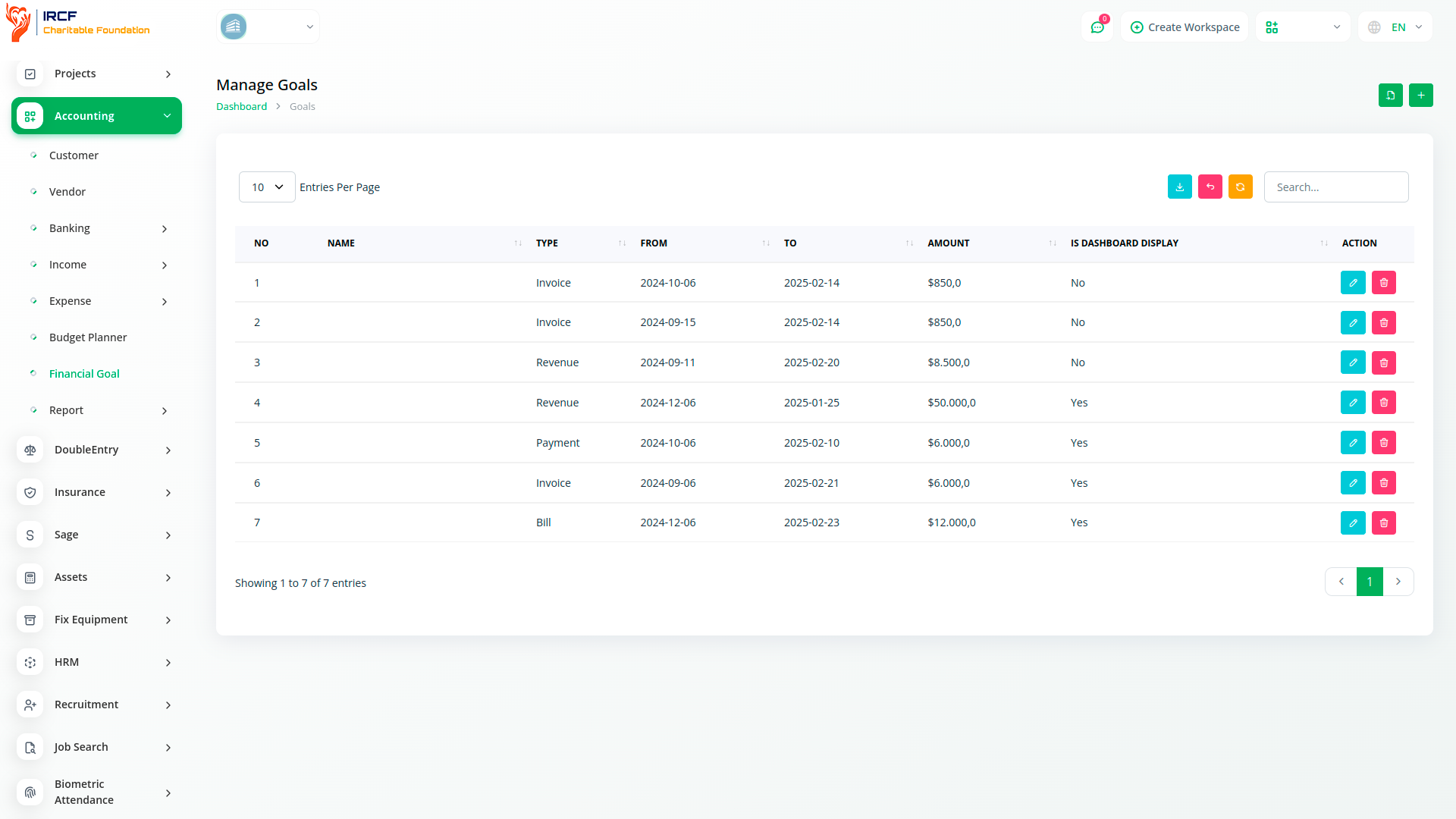
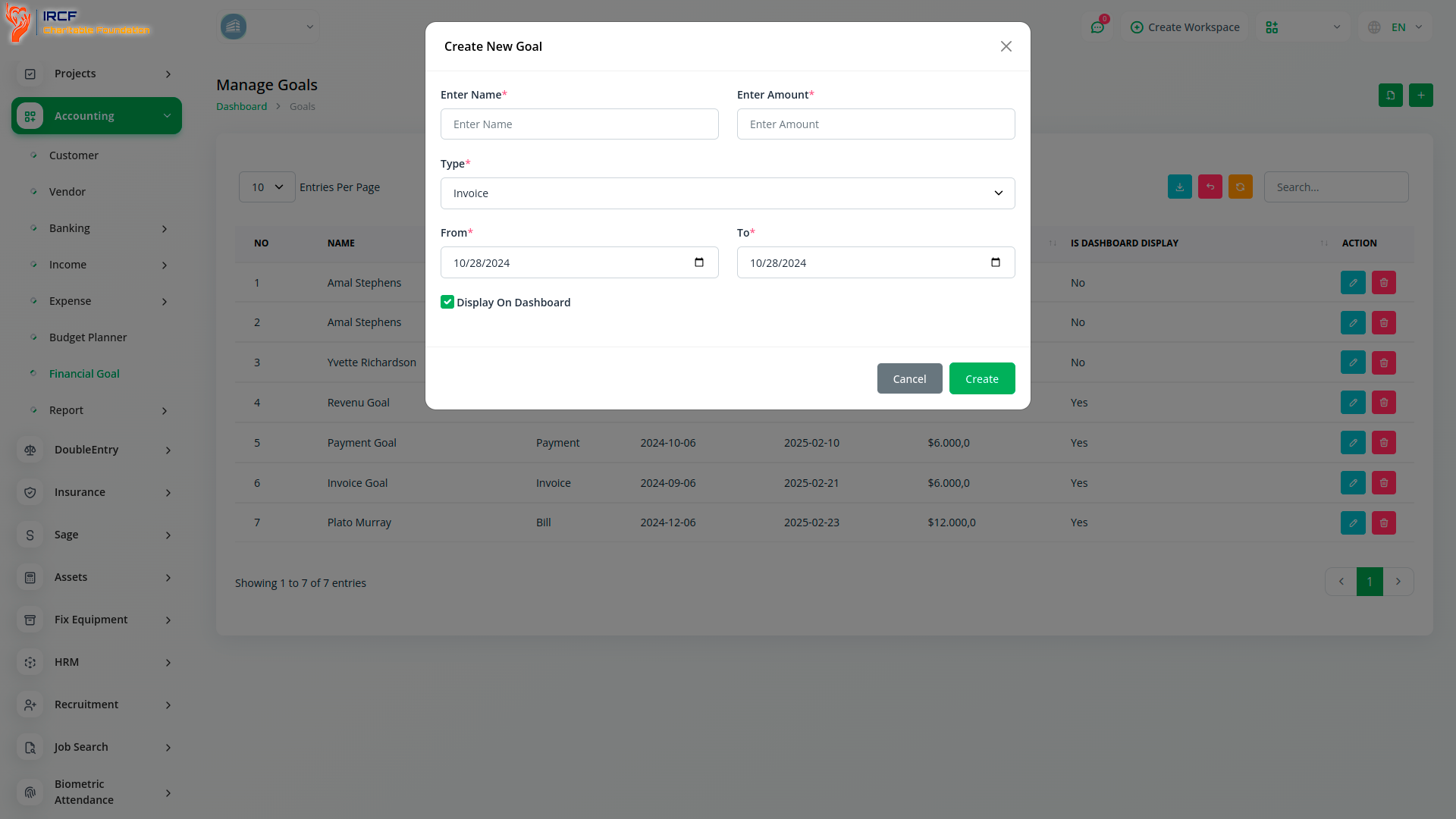
Financial goals may be classified based on timeframe and function:
Short-Term Goals (0–12 months): Quick-turn initiatives like launching a new service, submitting a grant application, or securing project startup funding.
Medium-Term Goals (1–3 years): Strategic milestones such as strengthening operational systems, scaling programmes, or establishing new partnerships.
Long-Term Goals (3+ years): Institutional aims including multi-year funding stability, achieving reserve targets, or building permanent infrastructure.
This categorisation supports prioritisation, sequencing, and transparent tracking of financial strategies.
The Financial Goal module in IRCF Workspace bridges strategic planning with operational budgeting.
Integrated with the Accounting system, it supports real-time progress tracking, goal-based reporting, and alignment with donor frameworks.
Use dedicated modules to simplify internal planning, demonstrate fiscal responsibility, and ensure that your resource decisions directly support mission outcomes.
Access a comprehensive suite of advanced tools for Accounting, Volunteer and Staff Management, Fund Disbursement, Outreach, Communication, Programme Oversight, and more — all in one central platform.
With IRCF Workspace, you can conveniently manage all your foundation’s operations and functions from a single, centralised platform.