
The SWOT Analysis module provides a structured, evidence-based framework for non-profit and humanitarian organisations to assess internal and external factors affecting their strategic direction.
By examining Strengths, Weaknesses, Opportunities, and Threats, your team can generate insights that support better decision-making, programme design, funding proposals, and risk mitigation strategies.
This module is aligned with globally recognised tools such as the USAID OCA, UNDP Capacity Assessment Framework, and IFRC Strategic Planning Toolkit.

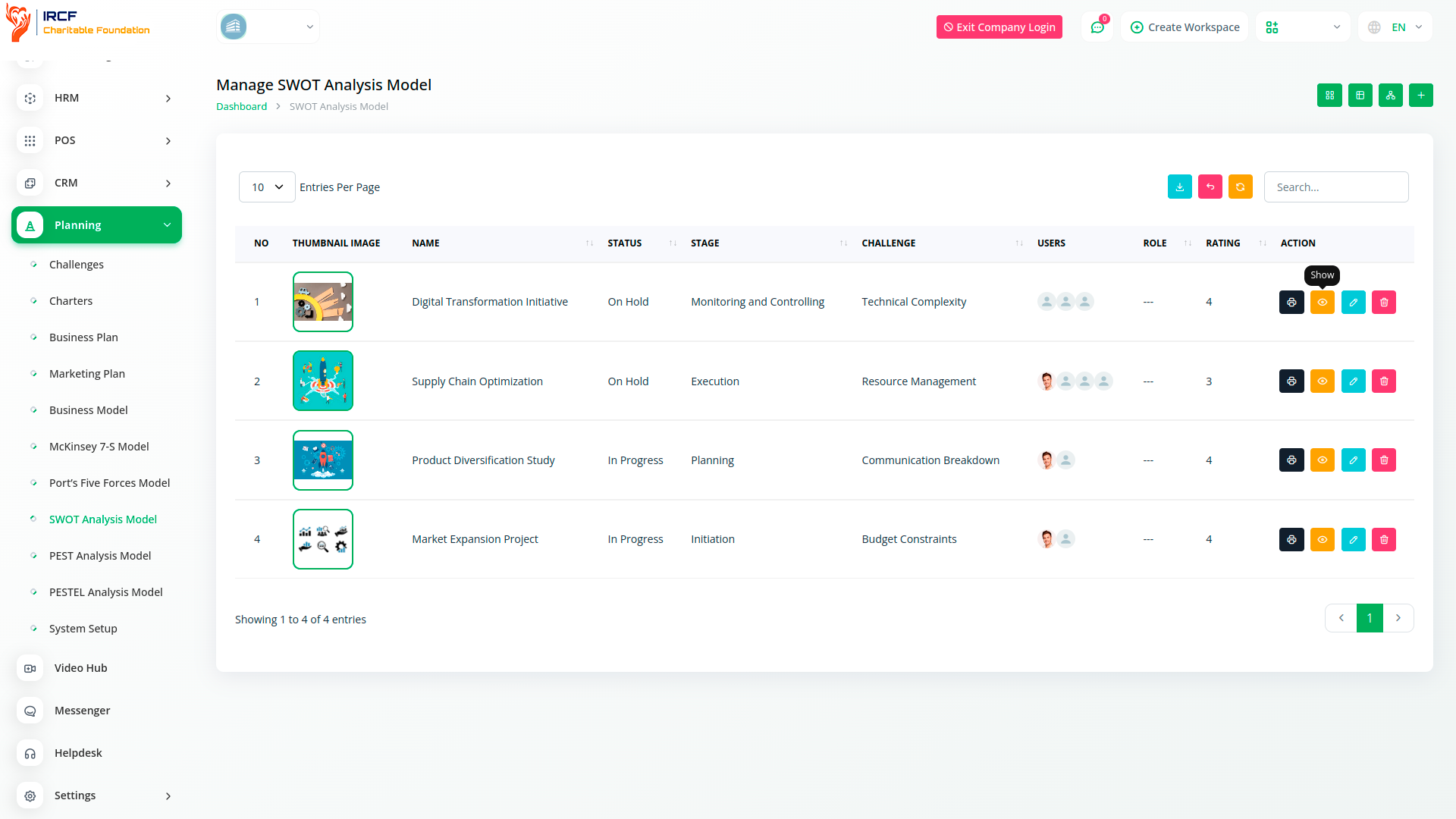
The SWOT Analysis Module features a clean, multilingual interface with a guided input process to support strategic planning exercises across departments or field offices.
Users can:
Define analysis context (programme, region, project cycle phase)
Collaboratively input findings
Attach documentation or evidence
Export results in presentation or donor-report format
All data is saved securely and can be reviewed or edited by authorised users.
Document and categorise your organisation’s core strengths — such as experienced staff, proven programme models, active community engagement, stable donor relationships, or technological capacity.
Use structured criteria to prioritise strengths based on relevance to your mission, replicability, and impact potential.
Strength records can be tagged by strategic theme (e.g. Health, Livelihoods, Education) and linked to ongoing programme performance indicators or evaluation data.
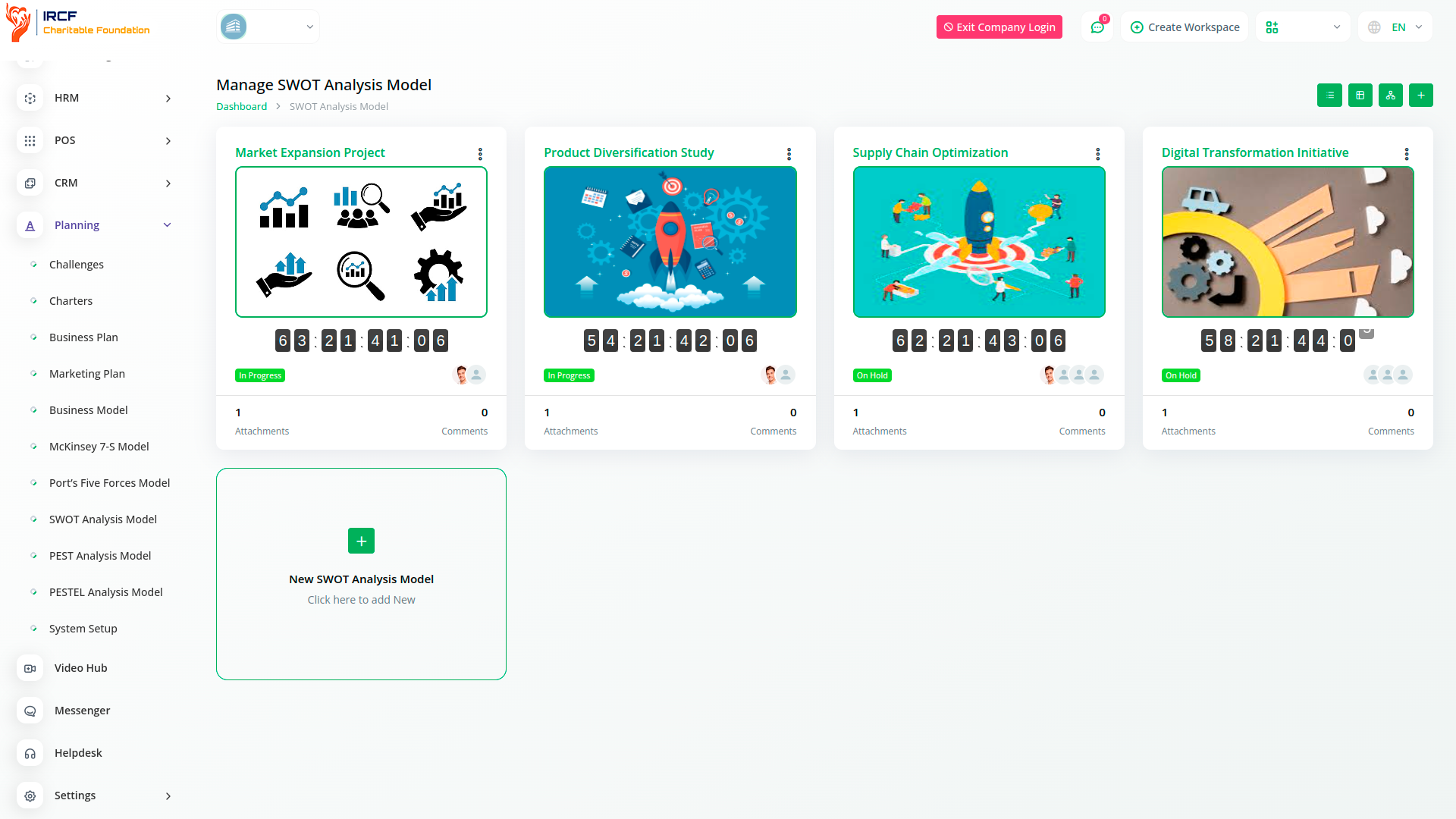
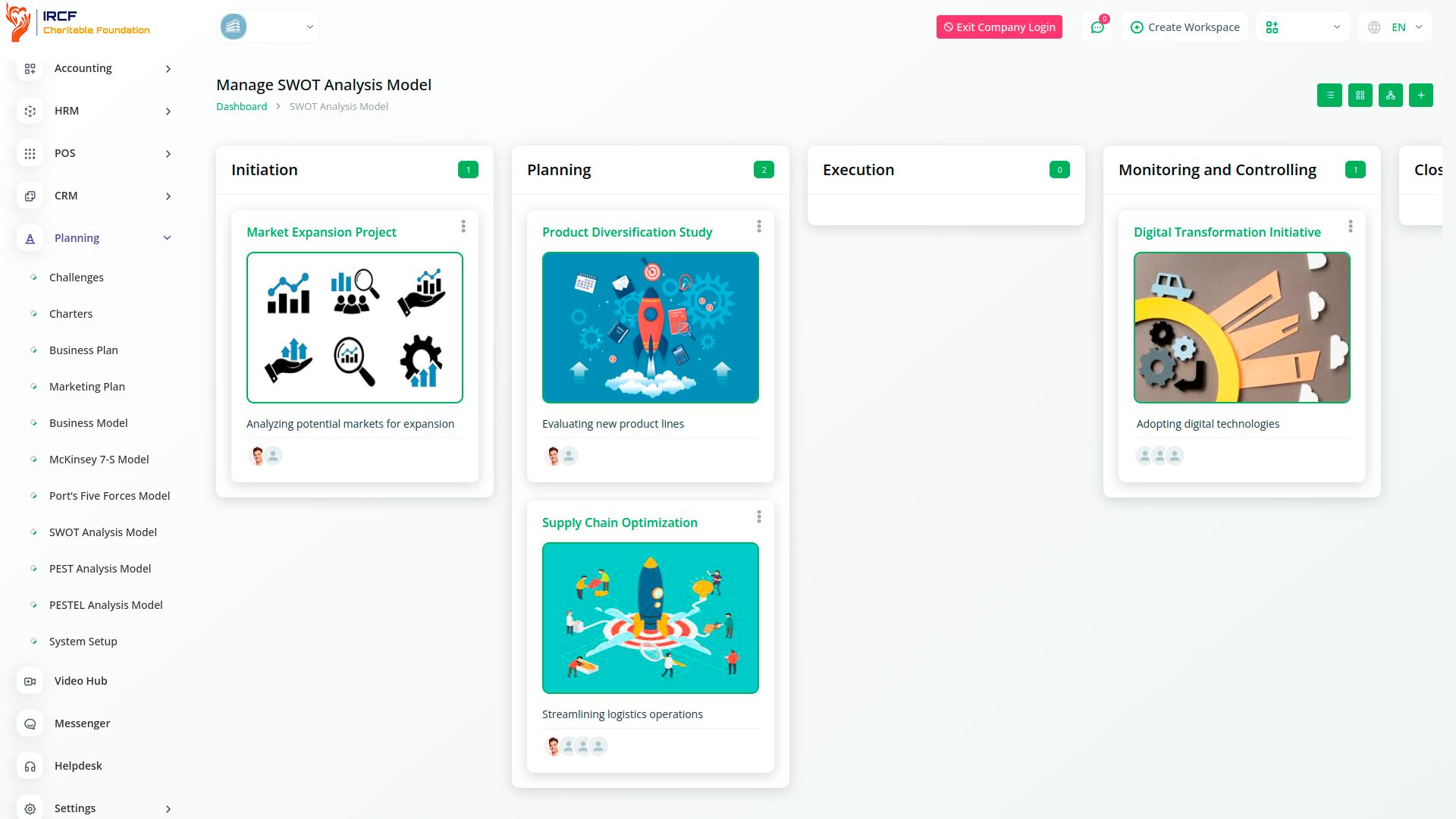
Identify and analyse internal limitations that may reduce your organisation’s effectiveness.
Examples include: inconsistent reporting practices, overdependence on a single funding source, high staff turnover, limited monitoring systems, or outdated digital tools.
Each weakness can be categorised by severity and functional domain (finance, HR, programme, governance).
Use this insight to inform capacity development plans and target areas for investment or technical support.
Identify external developments that present strategic potential for programme growth, partnerships, or innovation.
These may include:
Shifting donor priorities or new funding mechanisms
Local policy changes favourable to your mission
Expansion of digital outreach channels
Emerging needs in underserved communities
The module supports tagging opportunities by geographic scope, funding relevance, or SDG alignment — supporting proactive planning and concept note development.
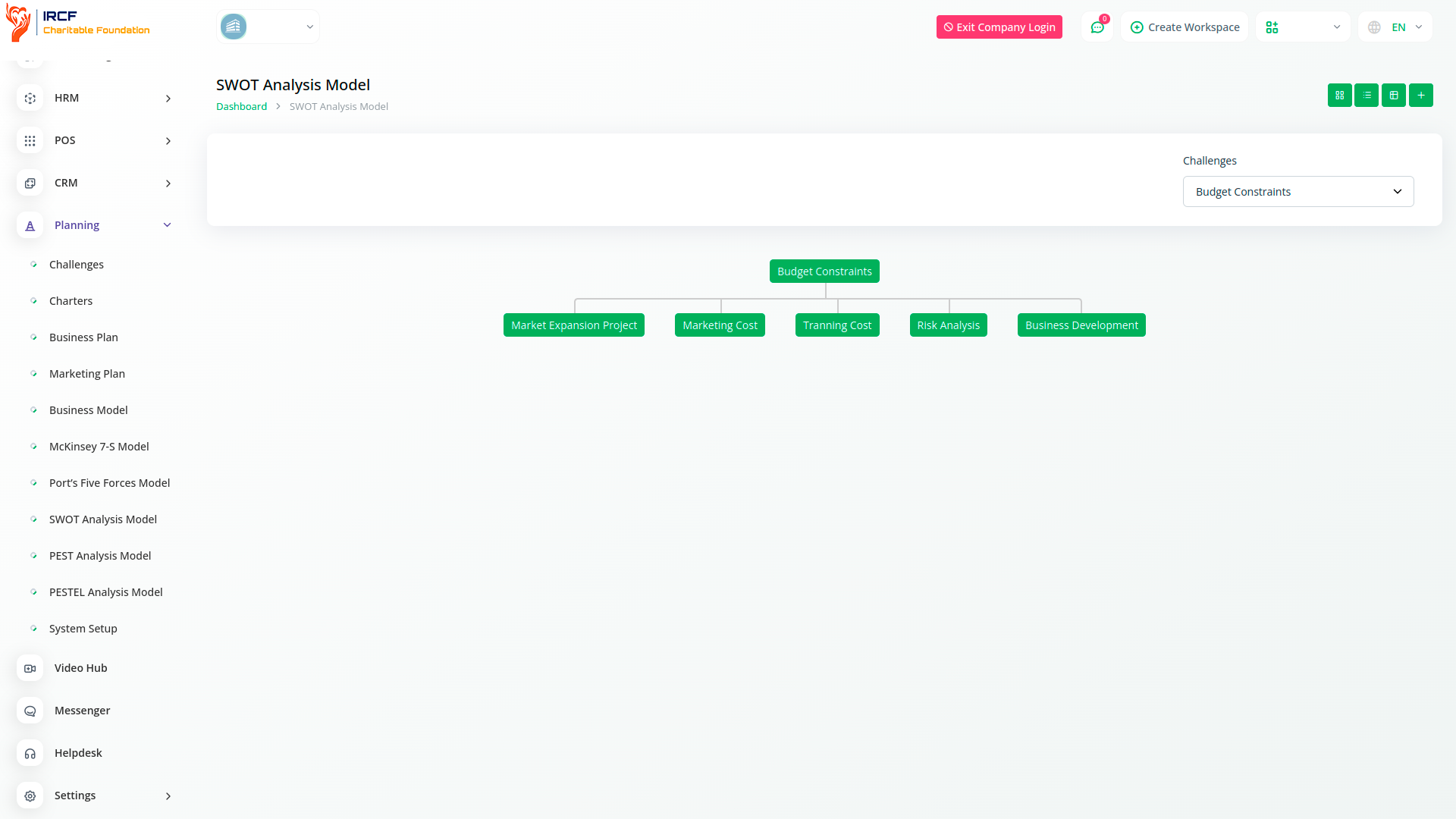
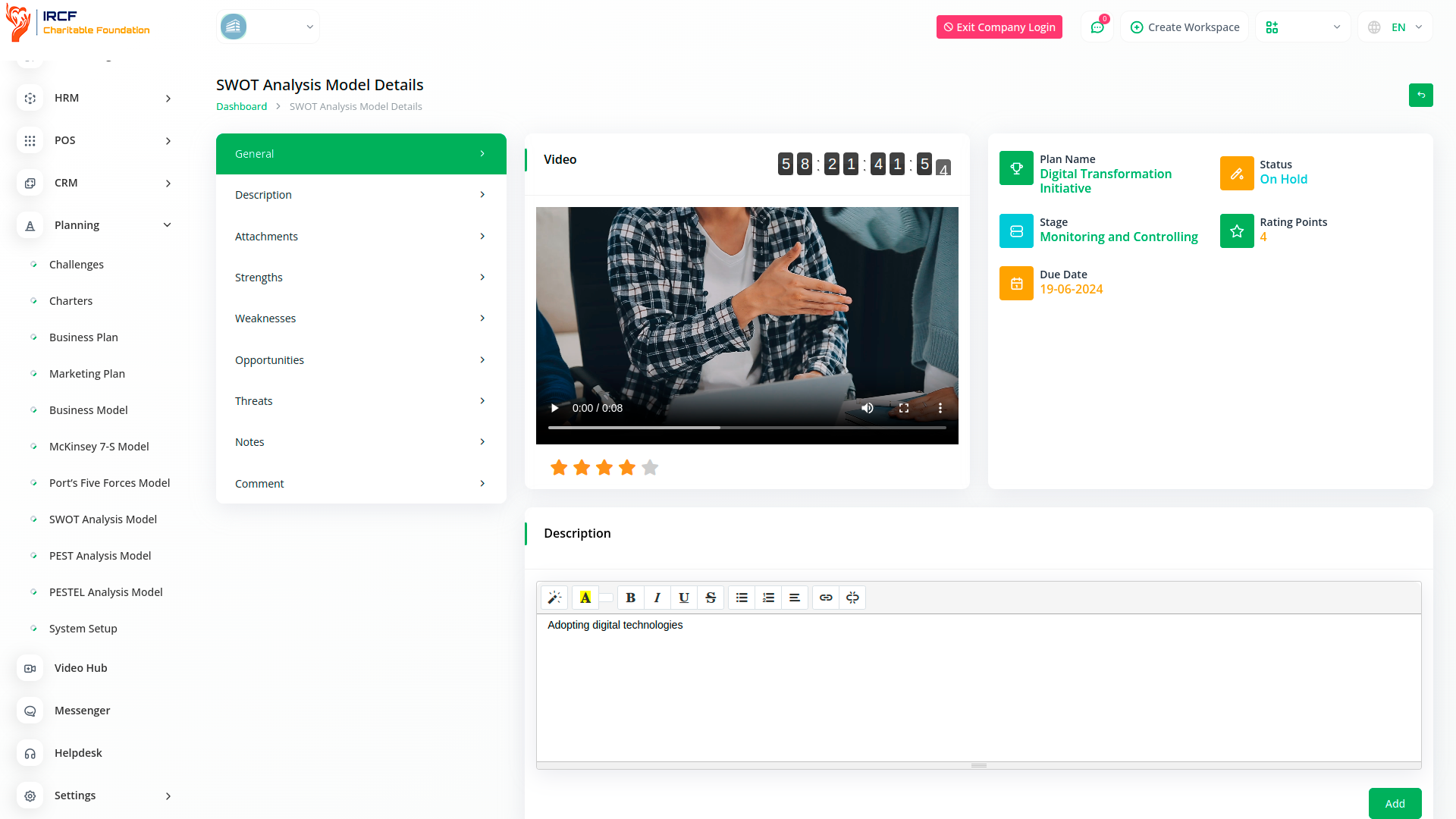
Examine risks that could undermine your organisation’s ability to deliver impact.
Examples include:
Decreased donor funding
Regulatory restrictions
Reputational damage
Political or environmental instability
Classify threats by likelihood and impact severity, and link them to risk mitigation strategies or contingency plans within your programme cycle.
This ensures threats are tracked, managed, and addressed through informed operational decision-making.
The SWOT Analysis module in IRCF Workspace provides a centralised, collaborative environment for strategic thinking, programme reflection, and organisational self-assessment.
All SWOT elements — Strengths, Weaknesses, Opportunities, and Threats — are linked to live project data, enabling evidence-based decisions, adaptive planning, and transparent donor reporting.
Integrated with other core modules (CRM, Projects, Risk, HRM), the tool ensures alignment between field realities and organisational strategy — helping you respond quickly to change, leverage your assets, and mitigate operational risks.
Access a full suite of advanced tools for Accounting, Volunteer Management, Donation Tracking, Outreach, Communication, Programme Administration, and more — all in one place!
With IRCF Workspace, you can conveniently manage all your organisation’s operations and charitable functions from a single location.


